
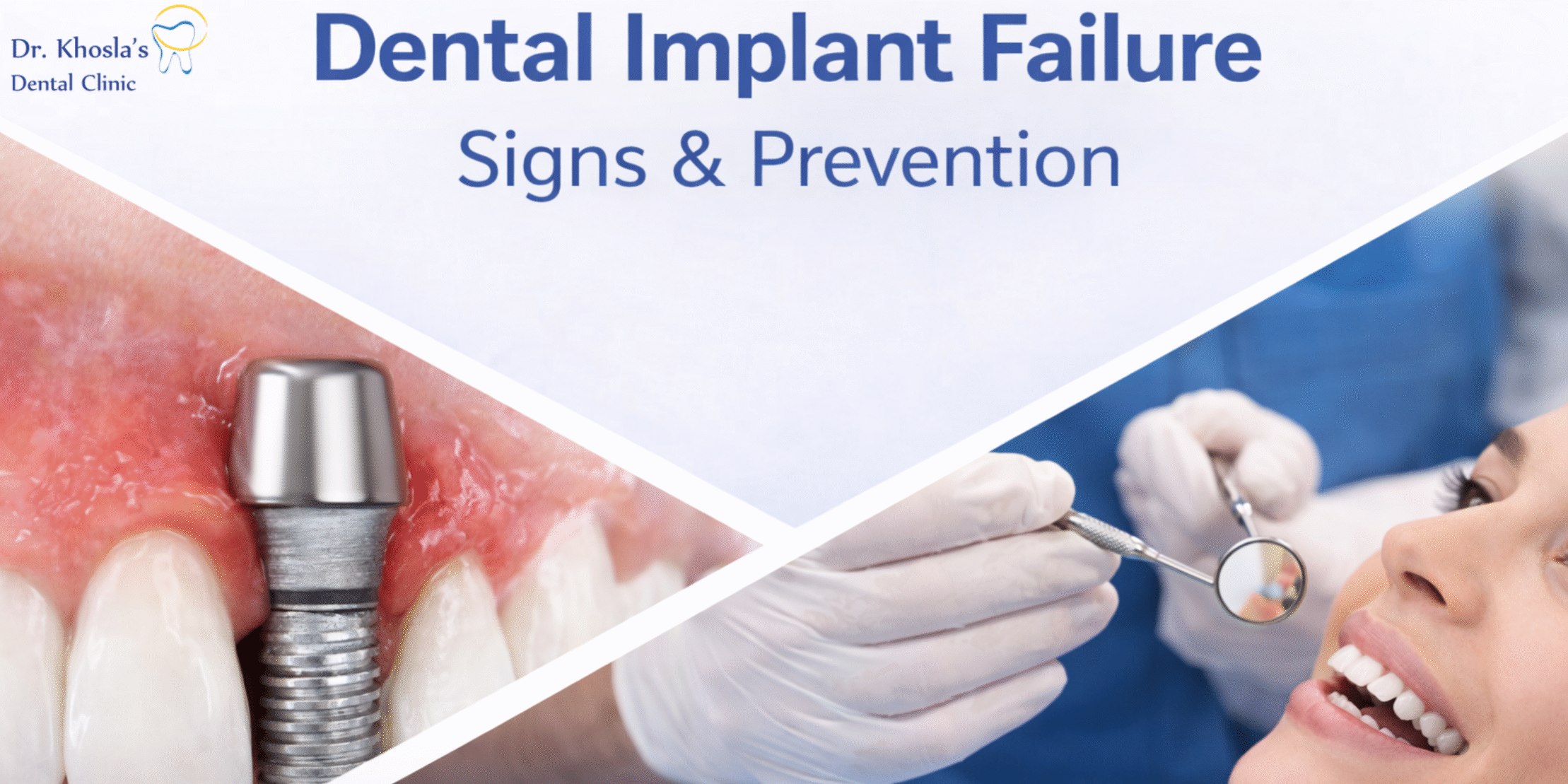
When it comes to tooth replacement, dental implants are considered to be one of the best (if not the best) treatment options, with a 95% success rate.
However, as with any surgical procedure involving the body’s ability to heal and integrate with foreign materials, failures can occur. Dental implant failure, although highly uncommon, can occur. What matters is that you are aware of the warning signs and get the help you need before the situation worsens.
From early detection to timely intervention and corrective measures, our dentists at Dr. Khosla’s Dental Clinic specialise in mitigating risks of dental implant failure. More on that will be discussed in this guide.
What Defines Dental Implant Failure?
In simple words, a dental implant failure is a situation where the implant doesn’t properly integrate with the jawbone or it fails after initially functioning well.
So, what’s a dental implant in the first place? An implant is a titanium post placed in the jawbone that serves as an artificial tooth root. Over time, it should fuse with the bone through a process called osseointegration.
The dental implant failure usually occurs in two stages:
Early failure: This occurs within the first few weeks or months after you receive the implant, often before it is fully restored with a crown.
Late failure: This occurs months or even years later after the implant has been in use. It usually occurs due to mechanical stress or gum disease.
What you do need to know is that implant failure is rarely “sudden.” In most cases, you will experience warning signs before the implant is lost.
What are the Early Signs of Dental Implant Failure?
So, what kind of warning signs should you keep an eye out for? Our dentists at Dr. Khosla’s Dental Clinic emphasise the importance of recognising early symptoms, primarily because they help prevent serious complications.
If you are dismissing the discomfort or assuming that healing takes time, you are delaying treatment for a failed dental implant.
Some of the early warning signs of dental implant failure include:
1. Experiencing persistent pain or discomfort
After your implant surgery, experiencing mild discomfort is expected. But, in normal cases, the pain should gradually reduce within a few days. So, if you are experiencing pain that’s persistent and getting worse, usually beyond your healing period, it is not normal. In most cases, consistent pain is a sign of infection, poor integration with the bone, or excessive pressure on the implant.
2. Swelling and inflammation around the implant site
As with pain, temporary swelling around the implant site is normal. But, if your swelling is persistent, worsening, or recurring, it could be a sign of peri-implant infection. Additionally, if the inflammation is accompanied by redness or warmth, it’s a more concerning situation and should be assessed immediately.
3. Bleeding or pus discharge
Experiencing ongoing bleeding after your implant surgery or the presence of pus is a red flag that should not be ignored. The primary cause is an infection that requires immediate professional attention before the situation worsens.
4. Implant mobility or looseness
Does your dental implant feel “loose,” feeling like it would come out? If done successfully, a dental implant should feel as stable as a natural tooth and not be mobile. Any movement, looseness, or shifting is a serious sign of failure and requires an immediate reassessment by your dentist.
5. Difficulty chewing or biting food
If you experience pain or discomfort while chewing or biting into your food long after the initial healing period, it may be a sign of dental implant failure. It could indicate improper placement, bite imbalance, or bone loss around the implant. If left untreated, it can worsen over time.
6. Gum recession around the implant
Receding gums can expose the implant surface, making it more vulnerable to infection and aesthetic concerns. If you notice gum recession around the implants, it is often a sign of peri-implant disease, which requires close monitoring and further evaluation.
What are the Common Causes of Dental Implant Failure?
Now that you have a clear understanding of the early warning signs of a dental implant failure, you may be curious about its causes.
The following are a few of the causes that contribute to the failure:
| Cause | What It Means |
| Poor Osseointegration | The implant does not properly fuse with the jawbone, leading to instability |
| Infection (Peri-implantitis) | Bacterial infection around the implant causing gum inflammation and bone loss |
| Poor Oral Hygiene | Plaque buildup around implants increases the risk of infection and failure |
| Smoking or Tobacco Use | Reduces blood supply, delays healing, and increases infection risk |
| Insufficient Jawbone | Lack of adequate bone support compromises implant stability |
| Improper Implant Placement | An incorrect angle or position leads to bite stress and long-term failure |
| Excessive Bite Force | Teeth grinding or clenching puts undue pressure on the implant |
| Uncontrolled Medical Conditions | Conditions like diabetes interfere with healing and bone integration |
The best way to prevent dental implant failure is to follow your dentist’s post-treatment protocols. Also, our dentists at Dr. Khosla’s Dental Clinic offer a detailed rundown of these risk factors so the patient is in the know and can take precautions to prevent the complications from developing.
Treatment Options for Failing Dental Implants
The first thing to understand about dental implant failure is that not all failing implants need to be removed. If the issue is detected early, it is quite possible to save the implant.
Some of the most effective treatment options include:
- In the early stages, professional cleaning, antibiotics, and improved oral hygiene may control infection and inflammation.
- Advanced cases may require surgical cleaning, bone grafting, or gum treatment. If the implant is severely compromised, removal may be necessary, followed by a carefully planned replacement after healing.
If you are experiencing any of the early signs of failing dental implants, our dentists at Dr. Khosla’s Dental Clinic will first conduct a thorough assessment and then carefully offer a treatment plan as needed.
How to Prevent Dental Implant Failure?
The good news is that most implant failures are preventable with the right care and professional guidance.
Here are a few tips that can help:
- The success of your implant starts before the first incision. At Dr. Khosla’s Dental Clinic, we utilise advanced 3D imaging and digital treatment planning to place every implant with microscopic precision, leading to higher success rates.
- Treat your implants better than your natural teeth. You must brush twice a day and use interdental brushes, and flossing with implant-specific floss are non-negotiable if you want to prevent the risks of dental implant failure.
- If you are considering dental implants, there is no better time to quit smoking. Most specialists recommend ceasing smoking at least two weeks before surgery and for at least three months afterward to allow the initial healing phase to complete successfully.
- Implants require professional monitoring. During your biannual visits to Dr. Khosla’s Dental Clinic, we check the implant stability and use specialised instruments to clean around it without scratching the surface, which could otherwise harbour bacteria, thereby reducing the risk of implant failure.
- If you grind your teeth at night, the sheer force can crack the porcelain crown or loosen the implant post. A great preventive measure is to wear a custom-fitted nightguard.
At Dr. Khosla’s Dental Clinic, your dental implant treatment is planned with meticulous attention to detail to ensure success.
Ensure Dental Implant Success with Dr. Khosla’s Dental Clinic!
Dental implant failure is rare, but it is not impossible. The good news is that most failures are preventable with proper planning, skilled execution, and consistent aftercare. Being aware of the warning signs and taking immediate measures can make a huge difference. Learn more about Dental Implants Cost in Delhi.
Schedule a consultation with one of our specialists today!